
Applied AI · Python Backend Engineering · ML Research
Building reliable AI systems from ambitious ideas.
I design production AI applications, event-driven Python systems, and machine-learning research workflows with careful attention to reliability, structure, and uncertainty.
For hiring teams
Start here if you’re hiring
I work across production AI, machine learning, and research engineering. Pick the path closest to your team’s needs. Each one has a résumé, examples of my work, and a way to reach me.
AI / backend engineer
I build Python backends and AI workflows that connect models, APIs, durable state, and operations.
See the work:
Production AI assistant case study
Event-driven Python systems
Applied ML engineer
I bring production ML experience alongside research depth in probabilistic reasoning and evaluation.
See the work:
Production AI assistant case study
ML algorithms and technical writing
Simulation & advanced modeling
I study longitudinal tumor-state forecasting and patient-conditioned uncertainty with inspectable graph models. A breast-MRI manuscript reports a held-out, within-trial-family evaluation and matched model controls. Separately, I have operated production Python and AI workflows. The research model is not a deployed clinical product.
See the work:
Crystal-shell graph forecasting case study
PhD research overview
Not sure which fits? Compare both résumés and read my full experience →
Research modeling. Production systems. Different evidence.
In my crystal-shell graph research, I tested a longitudinal tumor-state forecaster, its image and message-passing components, and the quality of uncertainty intervals. This is retrospective research, not a clinical deployment. In my production AI assistant work, I built and operated Python and database-backed workflows with retries and monitoring. I bring both sets of habits to an applied modeling team: explicit evaluation boundaries and software designed to run reliably. The production experience does not validate a healthcare model.
Explore the research case study · See the production AI assistant case study · Compare résumés
Beyond the résumé: Read how I work with others →
SELECTED WORK
From ambiguous problems to reliable systems
Production AI
I designed the production architecture around a shared employee assistant, separating retrieval, individual memory, tool permissions, isolated execution, and deployment checks.
Backend Systems
Developed event-driven Python services and Airflow workflows connecting APIs, queued workers, databases, reporting systems, and operational monitoring.
Applied ML
Built LLM-powered communication services and reusable computer-vision, OCR, metadata, and image-similarity pipelines.
Agentic Systems for My Research
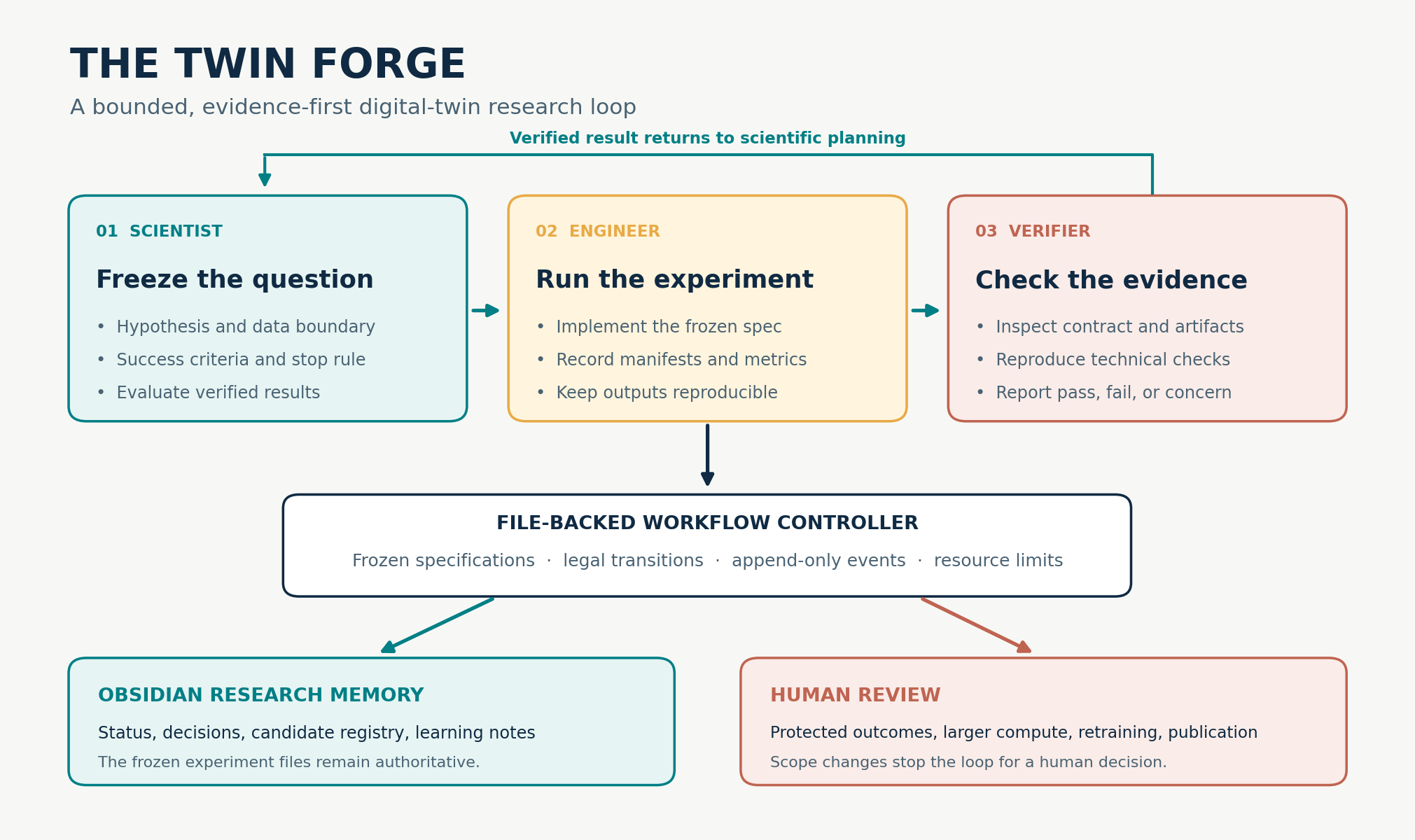
I am developing the Twin Forge research workflow for bounded experiments, independent verification, and reviewable learning. Engineering completion is separate from a verified result.
Inspect the work, not just the résumé
Production architecture and operating boundaries
In my employee-assistant case study, inspect the architecture evolution and end-to-end request pipeline. I describe identity isolation, retrieval authority, typed tools, deployment checks, and failure recovery. I do not publish employer-specific traces or unsupported adoption numbers.
Forecasts with explicit evaluation limits
In my breast-MRI graph study, inspect manuscript figures, controlled ablations, regional error, and interval coverage. Its held-out cohort is nested in the same trial family, so this is retrospective research, not independent-trial or clinical validation.
FEATURED RESEARCH WORKFLOW
Making the Twin Forge Observable
I began with a Scientist and Engineer research workflow. This follow-up explains why I added independent verification, bounded recovery, and readable research memory. It separates engineering completion from a scientifically verified result.
Latest Production AI article
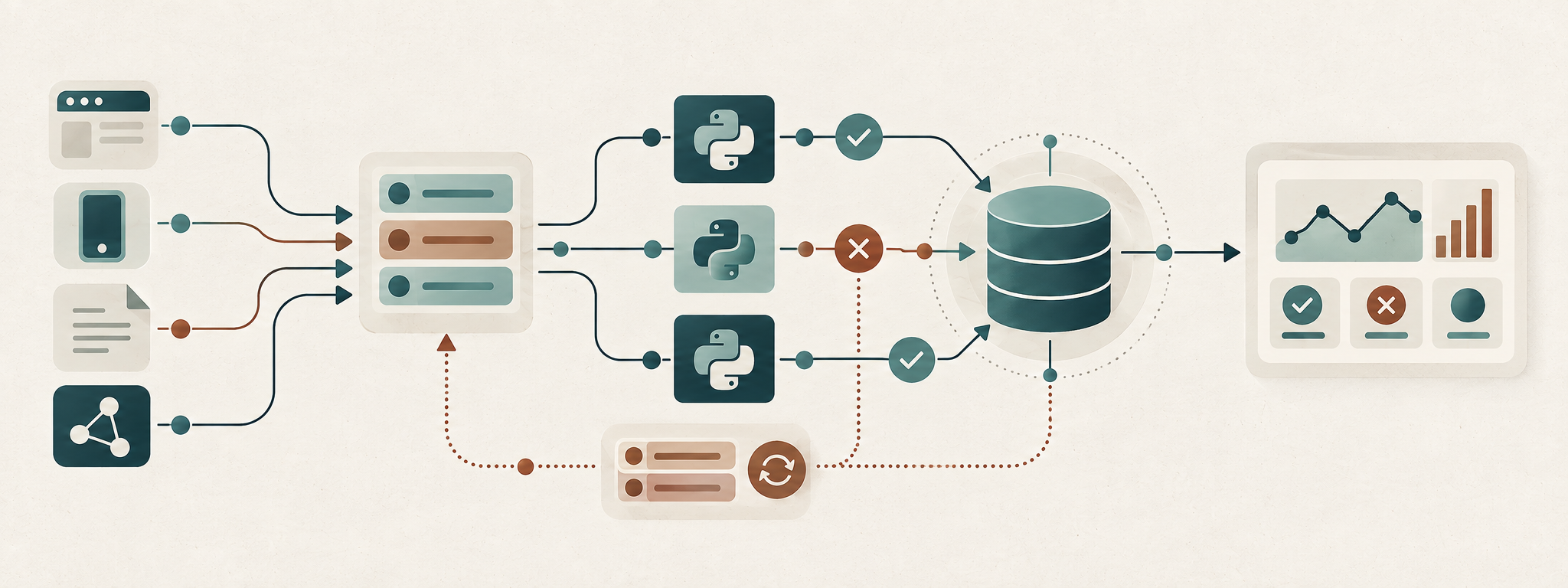
Designing Event Driven Python Systems for Reliable AI Workflows
A practical guide to queues, durable state, idempotency, retries, orchestration, and observability for AI workflows that need to survive partial failure.
Industry experience
Engineering depth across the full system
At Gray Falkon, I progressed from Developer to Senior Data Scientist, building and maintaining production systems for applied AI, marketplace data, workflow automation, and operational tooling.
- Customer-facing and internal LLM applications for retrieval, classification, translation, and context-aware generation
- Python APIs, queued workers, data services, and Airflow orchestration
- Reusable OCR, image-processing, and similarity systems
- Shared authentication, email, account, browser-workflow, and monitoring utilities
Doctoral research
Machine learning with structure, uncertainty, and careful evaluation
My current work investigates how machine-learning models can forecast future biological and clinical states while remaining structurally interpretable and explicit about uncertainty. The projects span graph neural networks, medical imaging, probabilistic modeling, calibrated prediction, and computer vision.
Writing and publications
New article
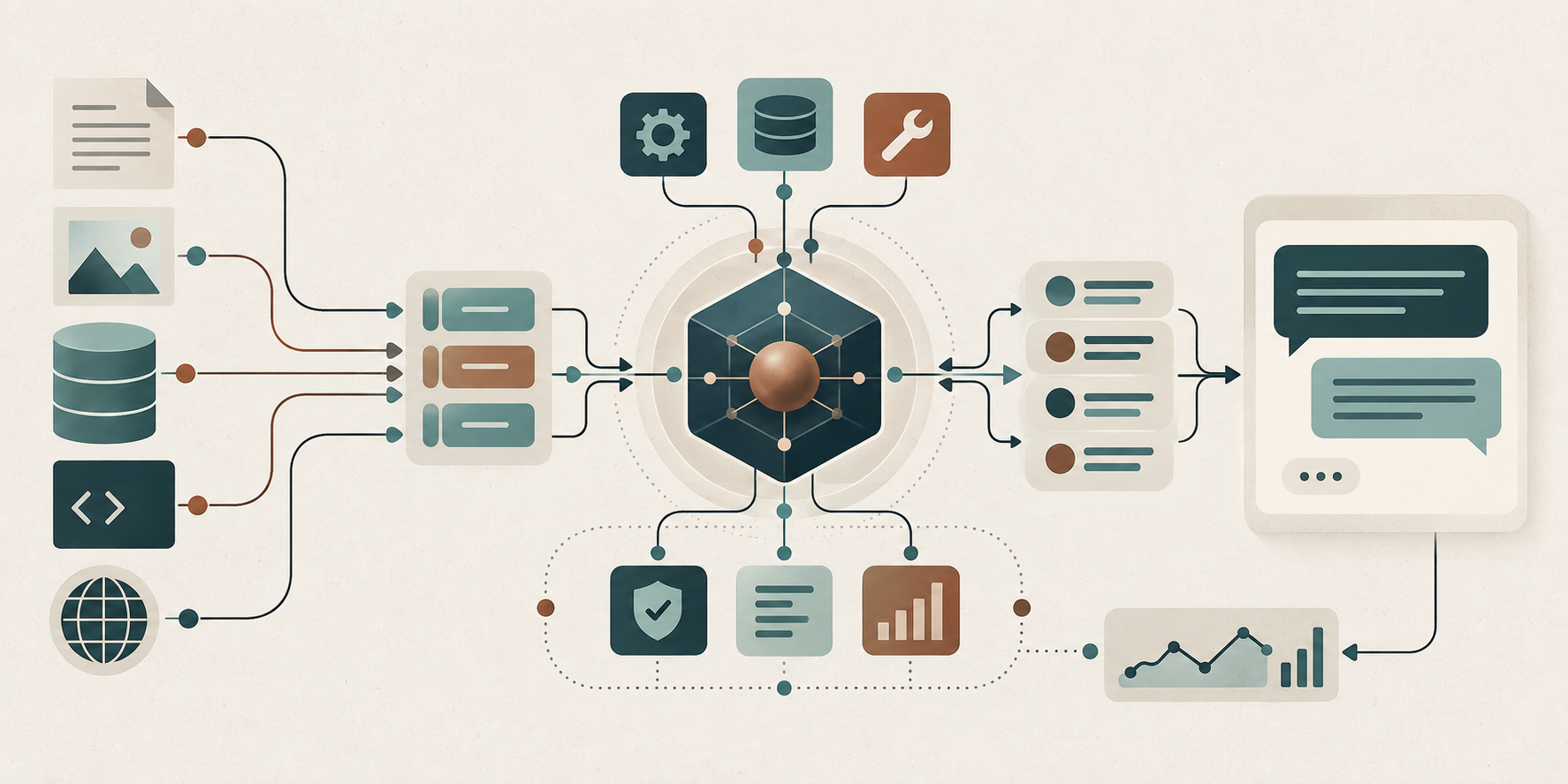
What It Takes to Move an LLM Application from Demo to Production
A production LLM system is much more than a model call. I examine context assembly, durable state, tool boundaries, asynchronous workflows, evaluation, and observability.
Technical writing
Selected publication
Nested Reasoning About Autonomous Agents Using Probabilistic Programs
Spotlight presentation, ICML Workshop on Generative Modeling and Model-Based Reasoning for Robotics and AI.
Interested in building thoughtful AI systems?
I am exploring applied AI, machine-learning engineering, Python backend, and advanced modeling opportunities. Tell me about your team and the problem you are solving.
Or write directly to irisrseaman@gmail.com. The email button opens your email application. It does not submit a website form.

