
Engineering case studies
Production AI
Technical essays on moving AI systems beyond demonstrations: Python backends, retrieval and context assembly, event driven workflows, tool boundaries, computer vision, evaluation, observability, and operational reliability.
FEATURED ENGINEERING CASE STUDY
Building a Production AI Assistant for Employee Knowledge and Operations
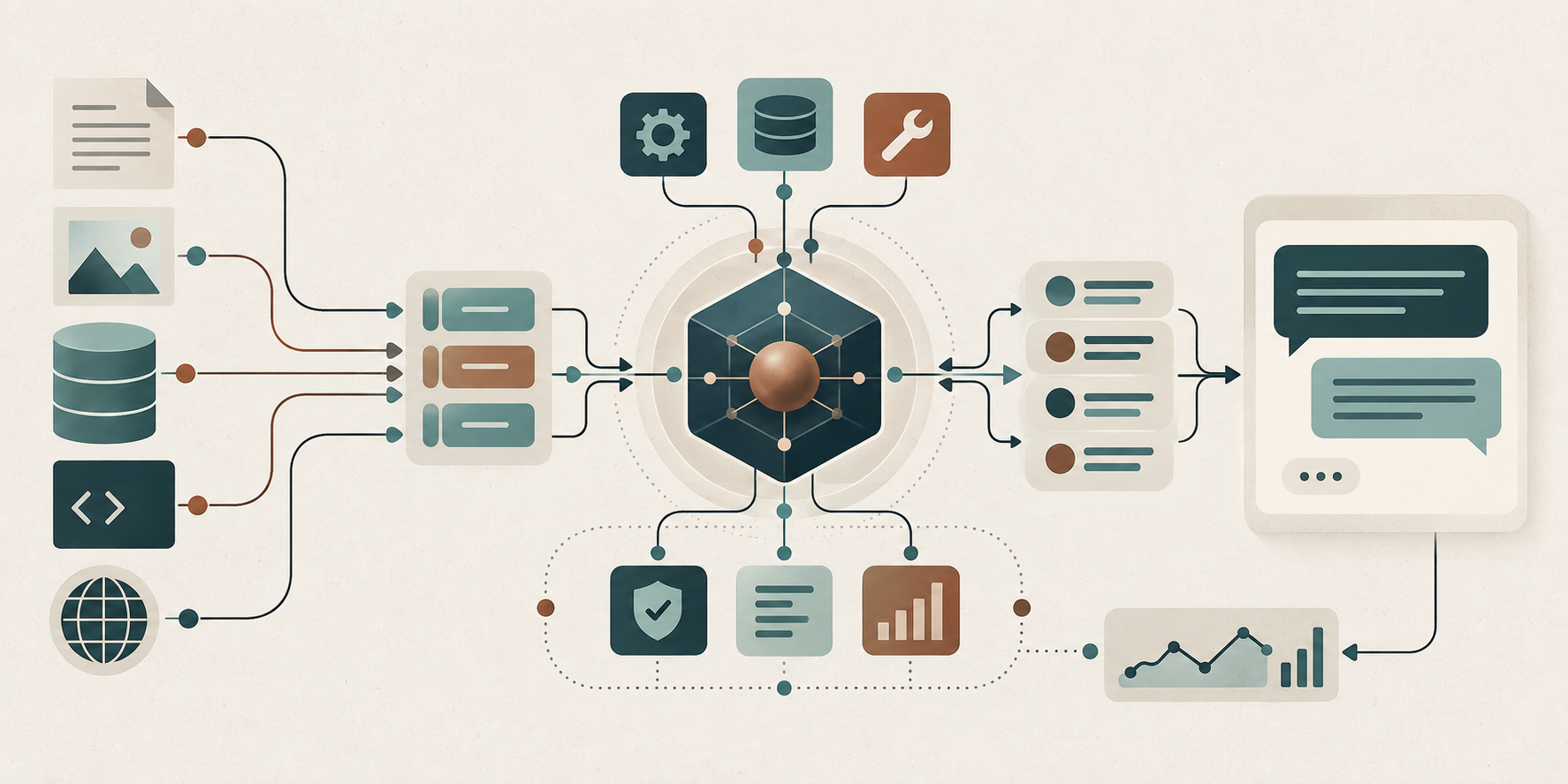
I designed the production architecture around a shared employee assistant. One conversational interface connects to authoritative retrieval and bounded tools, while authenticated identity, per-user memory, profile permissions, and isolated command execution stay in separate trust boundaries. I explain the architecture, evaluation strategy, deployment checks, failure modes, and what I can substantiate publicly.
Published
From model call to operational system
What It Takes to Move an LLM Application from Demo to Production
A production LLM system is much more than a model call. Drawing on my work building applied AI backends, I examine context assembly, durable state, tool execution, asynchronous workflows, partial failure, evaluation, and observability.
MORE PUBLISHED WORK
Systems I have built and examined
Designing Event Driven Python Systems for Reliable AI Workflows
I examine API handoffs, queued workers, database-backed state, retries, and how to recover when asynchronous AI work fails partway through.
Making the Twin Forge Observable
I explain the later research-workflow architecture: independent verification, bounded recovery, monitoring, and a readable learning layer. This is research automation, not clinical deployment or a positive scientific result.
Engineering AI as a complete system
The focus of this series is the work around the model: the software boundaries, data contracts, failure modes, and evaluation practices that make an AI capability dependable in operation.

